Where to study in Australia
Eight cities, eight very different lives. The city you choose decides how much you spend, how easily you find work, what your weekends look like – and, for some courses, how long you can stay after you graduate. Here is an honest comparison to help you decide.
Compare costs Book a free consultation
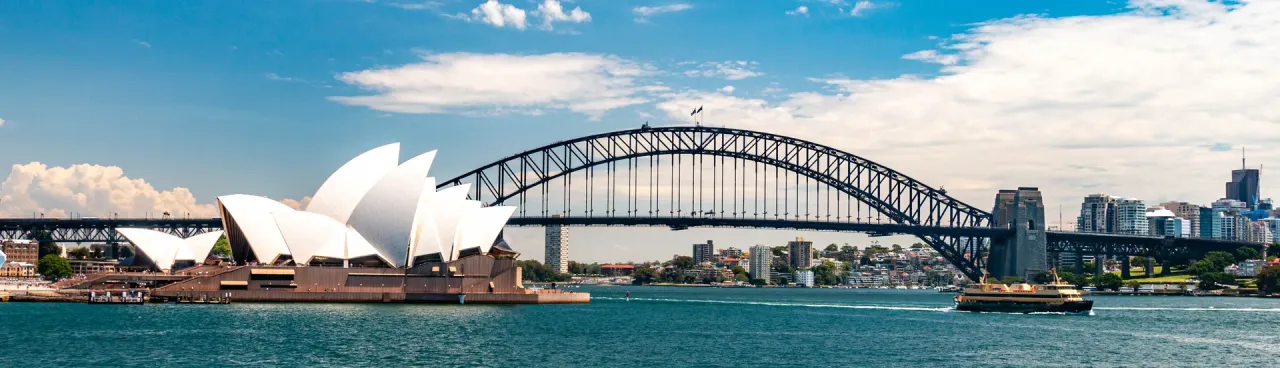
01 Sydney — the big one
Biggest city · ~5.5 million people · shared room approx. A$300–450/week
What it's like: Australia's largest and best-known city: harbour, beaches, a huge choice of schools and the most jobs – but also the highest rent. Our office is here, so we know Sydney best.
Study: The widest choice in Australia – English schools, VET colleges (business, hospitality, IT, construction, beauty) and major universities.
Work: Hospitality, retail, cleaning, construction, events, warehousing; professional jobs in finance, IT and marketing.
Climate: Mild. Summer about 19–27 °C, winter about 9–18 °C.
Best for: students who want the most choice of courses and jobs, and the big-city lifestyle – and can budget for higher rent.
02 Melbourne — culture and coffee
~5.3 million people · shared room approx. A$250–380/week
What it's like: Australia's culture capital – cafés, laneways, music, sport and a big student population. A bit cheaper than Sydney, with a strong public transport network (trams).
Study: Many English schools and VET colleges, plus several of Australia's top universities.
Work: Hospitality (lots of cafés and restaurants), retail, logistics, events, manufacturing; professional jobs in business and tech.
Climate: Changeable – "four seasons in one day". Summer about 13–26 °C, winter about 6–14 °C.
Best for: students who love city culture, food and arts, and don't mind cooler winters.
03 Brisbane — sunny and affordable transport
~2.7 million people · shared room approx. A$260–380/week
What it's like: A relaxed, warm, fast-growing city, with Olympic Games coming in 2032. Public transport in Queensland costs a flat 50 cents per trip, which saves students real money.
Study: Good choice of English schools, VET colleges and universities.
Work: Hospitality, retail, construction, logistics, administration and customer service.
Climate: Subtropical. Summer about 21–29 °C, winter about 10–21 °C.
Best for: students who want sunshine, a slower pace than Sydney and lower day-to-day costs.
04 Gold Coast — beach life
~0.7 million people · shared room approx. A$280–420/week · counts as regional
What it's like: Surf beaches, theme parks and a holiday atmosphere all year round. Smaller than the big cities and more laid back. Like Brisbane, it has 50-cent public transport.
Study: English schools, VET colleges (especially hospitality and tourism) and universities.
Work: Tourism, resorts, theme parks, hospitality, retail, cleaning.
Climate: Subtropical. Summer about 21–29 °C, winter about 13–22 °C.
Best for: students who want a beach lifestyle and work in tourism. Regional bonus: the Gold Coast counts as a regional area for migration (see Studying in a regional area below).
05 Perth — west coast and big wages
~2.3 million people · shared room approx. A$270–400/week · counts as regional
What it's like: Sunny, spacious and relaxed, with beautiful beaches. Isolated from the east coast but with a strong economy driven by mining and engineering.
Study: English schools, VET colleges (trades, engineering, hospitality) and universities.
Work: Hospitality, cleaning, construction, mining support, warehousing; trades and engineering for qualified people.
Climate: Hot, dry summers about 18–31 °C; mild winters about 8–19 °C.
Best for: students in trades and engineering, and anyone who wants sunshine and space. Regional bonus: Perth counts as a regional area for migration.
06 Adelaide — best value capital
~1.4 million people · shared room approx. A$220–330/week · counts as regional
What it's like: A calm, friendly city with some of the lowest living costs of any capital. Wine regions and beaches nearby.
Study: English schools, VET colleges and universities, often with smaller classes.
Work: Hospitality, retail, healthcare support, manufacturing, logistics, agriculture nearby.
Climate: Warm, dry summers about 17–29 °C; cool winters about 8–16 °C.
Best for: students on a budget who want a quieter life. Regional bonus: Adelaide counts as a regional area for migration.
07 Hobart — small and beautiful
~0.25 million people · shared room approx. A$220–320/week · counts as regional
What it's like: Tasmania's capital – a small harbour city surrounded by mountains, nature and great food. Quiet, safe and close-knit.
Study: A smaller choice of schools and colleges, plus the University of Tasmania.
Work: Hospitality, tourism, food services, retail; fewer jobs than the big cities.
Climate: The coolest capital. Summer about 12–22 °C, winter about 5–13 °C.
Best for: students who love nature and a small-town feel. Regional bonus: Hobart counts as a regional area for migration.
08 Darwin — the tropical north
~0.15 million people · shared room approx. A$250–380/week · regional (higher category)
What it's like: Tropical, multicultural and close to Asia, with national parks on the doorstep. Small, with a wet season (November–April) and a dry season. You will probably want a car or a bike.
Study: A limited choice of English schools and colleges, plus Charles Darwin University.
Work: Construction, hospitality, tourism, transport, remote and site services.
Climate: Hot all year. About 20–33 °C, very humid in the wet season.
Best for: adventurous students who want the biggest regional advantage and don't mind heat. Regional bonus: Darwin is in the higher regional category.
Compare the costs
Approximate weekly costs for one student, in Australian dollars (2026).
| City | Shared room | Public transport | Groceries |
|---|---|---|---|
| Sydney | 300–450 | 40–60 | 90–150 |
| Melbourne | 250–380 | 35–55 | 85–140 |
| Brisbane | 260–380 | about 5 (50c fares) | 85–140 |
| Gold Coast | 280–420 | about 5 (50c fares) | 85–140 |
| Perth | 270–400 | 25–45 | 85–140 |
| Adelaide | 220–330 | 25–40 | 80–130 |
| Hobart | 220–320 | 25–45 | 85–140 |
| Darwin | 250–380 | car or bike recommended | 90–150 |
See our Cost of living page for a full monthly budget and the money you need to show for a student visa.
Studying in a regional area
For migration purposes, everywhere except Sydney, Melbourne and Brisbane counts as "regional" – including Perth, Adelaide, the Gold Coast, Hobart and Canberra, as well as smaller cities and towns.
Studying and living in a regional area can bring extra benefits, for example:
- Longer post-study work rights for eligible graduates with a bachelor degree or higher – usually 1 extra year, or 2 extra years in the higher category such as Darwin.
- Lower living costs and often smaller classes.
These rules depend on your course, provider and location, and they change from time to time. We check the current rules for your specific plan before you enrol.
Not sure which city?
Tell us what matters to you – budget, course, work, lifestyle, future plans – and we'll help you choose the right city and school. Your first consultation is free (in person in Sydney, by phone or online).
Costs are approximate 2026 estimates for one person and vary by suburb, season and lifestyle. Visa and migration information is general only and is not advice for your situation – rules change, so we always check the current Department of Home Affairs requirements for your case.